Dry Media Color Study
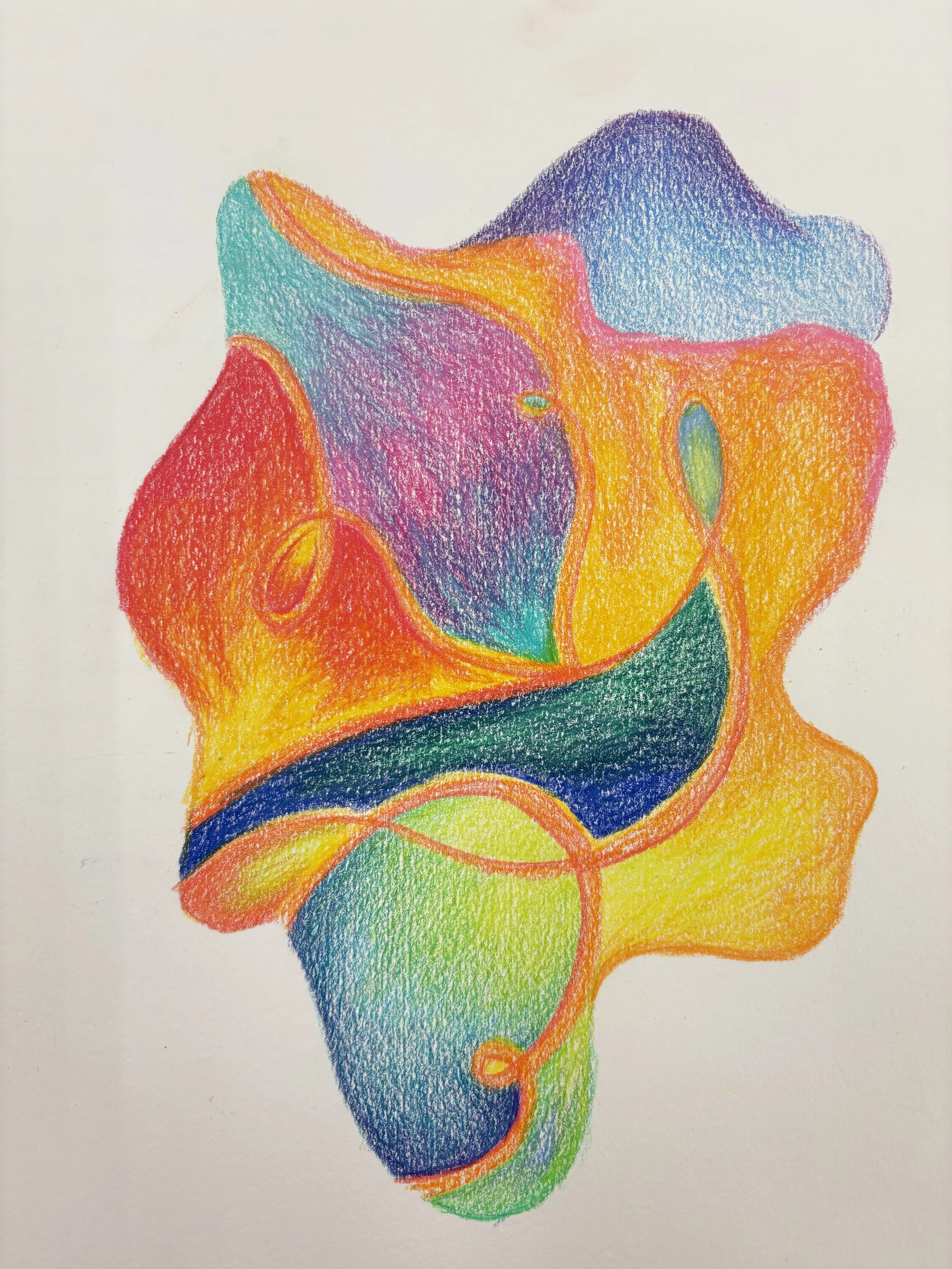
Final study after 30-40 minutes using Prismacolor pencils (72pk)
Ideas for lessons PK-12
For each grade level, I would have a variety of materials that I listed earlier. In Exploring Art Materials, Chapter 2, it says that colored pencils are important to experiment with to learn color groupings but also to explore creativity. (pg 46) Before starting any of the following lessons, kids would be able to experiment for 15-20 minutes with colored pencils, pastels, etc., to see what marks they can make before starting a project.
Elementary School
For this age group, my project would most likely be open-ended but include the colors of the rainbow and shadows. We would read a book about shadows so that I can point out what colors are capable of doing once in the light vs. shadow. Then the kids can create a visual response to the book!
Middle School
At this level, I would have kids start to learn about the primary and secondary colors. I would have them start by picking their dry color materials and take turns blending colors into one another to see what they will want to use in their finished work. The project could be a visual reaction to a song or an open theme such as movement.
High School
As kids get older, they tend to attach to a certain material. I think it is important to have students do a mixed media piece about anything that represents who they are. I think identity projects allow kids to express themselves not only through imagery but also through color and choice, which is equally important.
During my study, I explored dry materials such as colored pencils, markers, oil pastels, and chalk pastels. Another part of this experiment was to compare the quality of each brand by looking at pigment, cost, and durability. Since my topic is patterns, I aimed to include repetition of mark and color in my exploration. After testing out a variety of colored pencils (Crayola, Prismacolor, and Roseart), I determined that Prismacolor pencils were the best to use. I like how soft these pencils are, and they contain a lot of bright pigment. I remember using these in my high school art class for the first time and then receiving my first box for that Christmas!
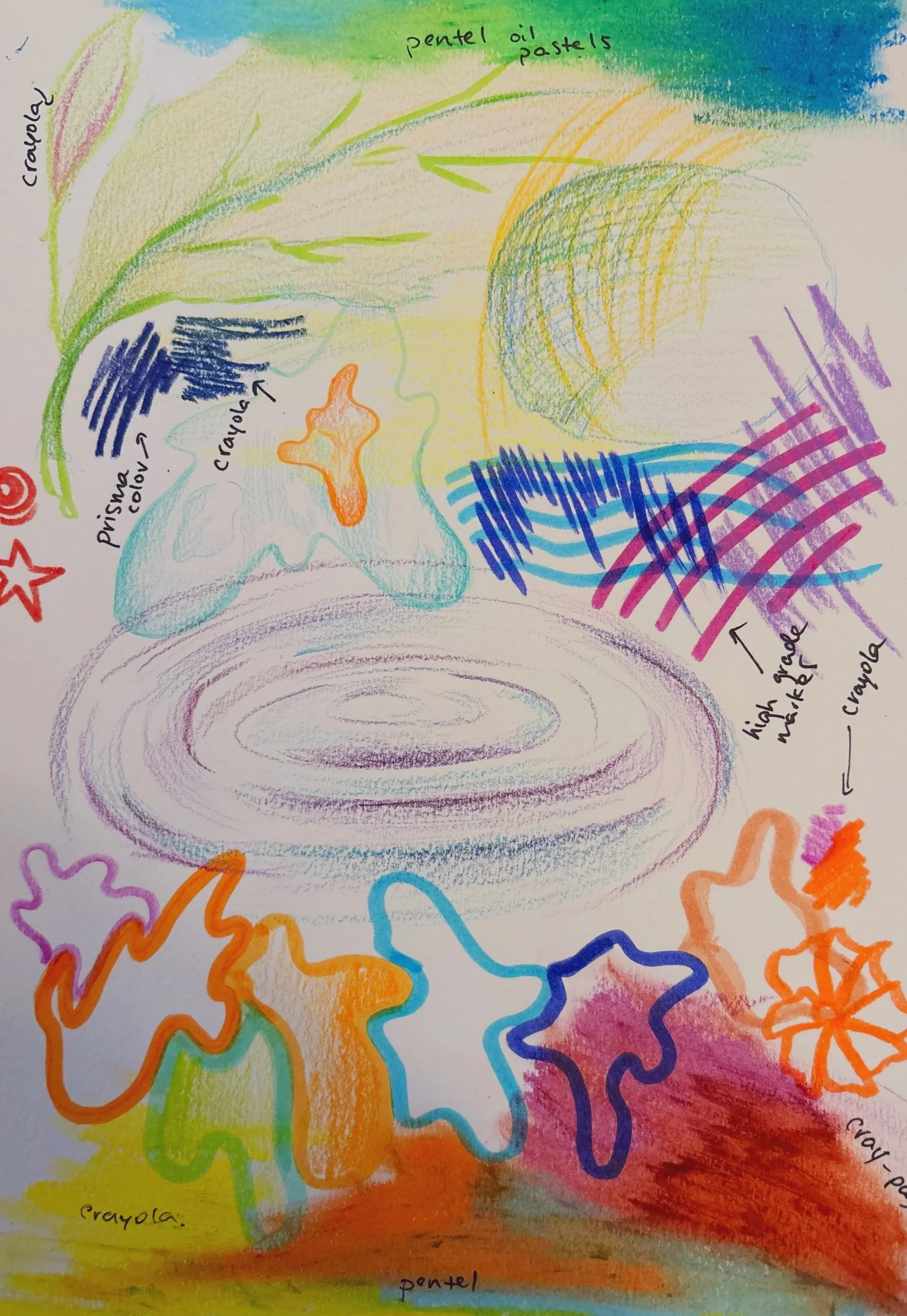
30-minute exploration of colored pencils, chalk, oil pastels, and markers.
Reflection:
In my research on the technical and safety information about colored pencils, I found that the main issue is about having it enter your skin, which could leave a mark but still be non-toxic. Another issue could be if younger students try to swallow a piece of a colored pencil. If this happens, sources say to drink water and clean the mouth.
Soft pastels can be toxic if inhaled because of the pigment dust. To help prevent this from happening, you can work on a flat surface and lightly tap and collect dust in a paper towel to dispose of it. Good studio habits are also important. This includes wiping down tables and materials, wearing a mask, maybe wearing gloves, and to smudge, you can use tissues or a blending stick.
When shopping for these materials, you can look for brands labeled “non-toxic” as a precaution.
https://www.johnshenstationery.com/Precautions-and-safety-for-the-use-of-colored-pencils.html
