Watercolor/Ink Study
During my watercolor study, I made an abstract piece that uses repetition of color, line, and shades. Since my topic is patterns, I wanted to make an organic pattern that ties in with the looseness of watercolor paint. Another part of this experiment was to compare the quality of each brand we had access to and decide for ourselves what to use during our final artwork. During my experimental stage, I tested Prang watercolors, Keebor watercolors, Blick black ink, and Faber-Castell watercolor pencils. We used Saran wrap, salt, and hydrogen peroxide to test different textures. In Exploring Art Materials, Chapter 3, it notes that "It's also important to have a space for color mixing besides the paper” (83). I think this is a good reminder that you can explore on the palette container and mix shades before transferring to paper.
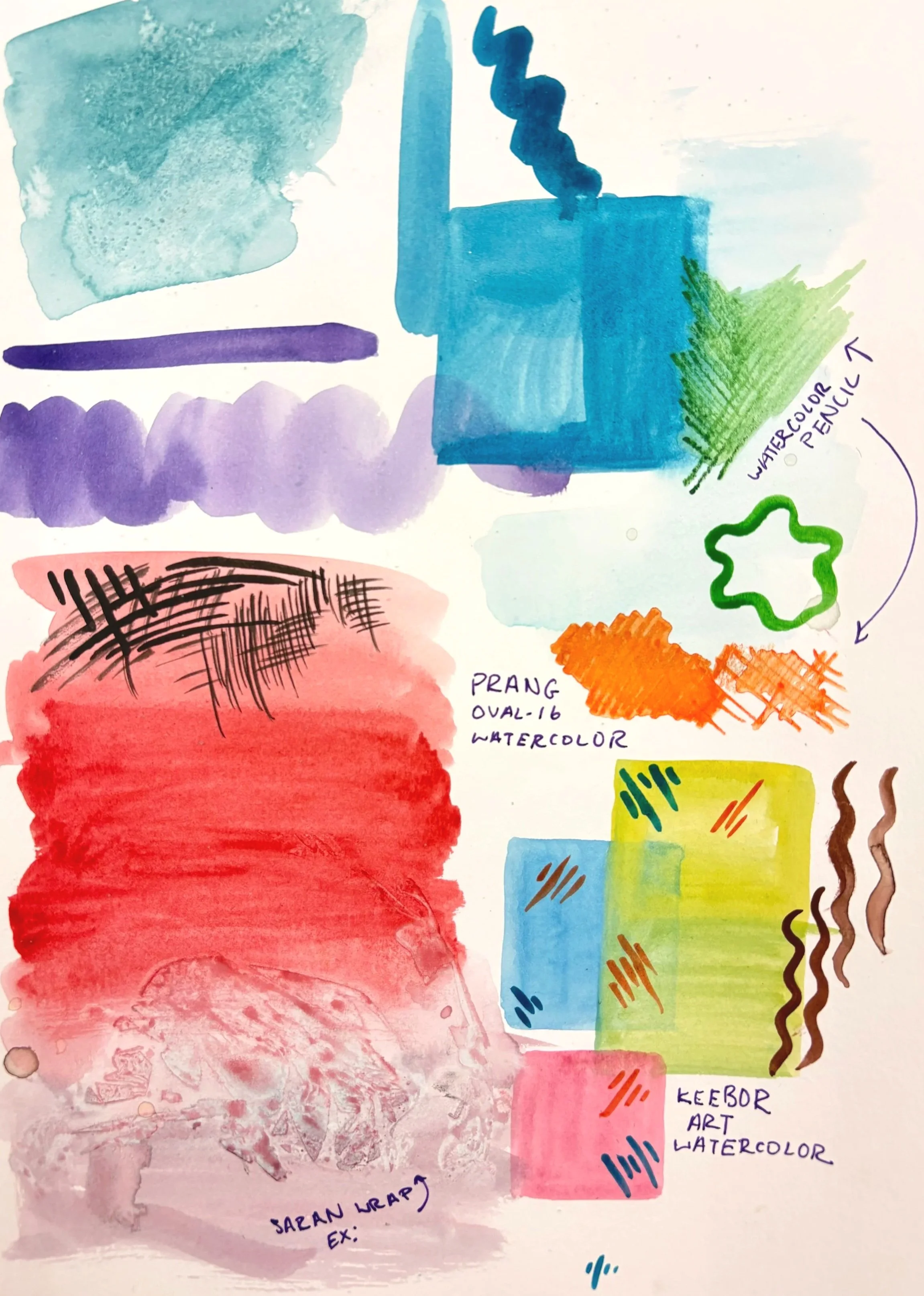
First part of exploring the materials discussed above!
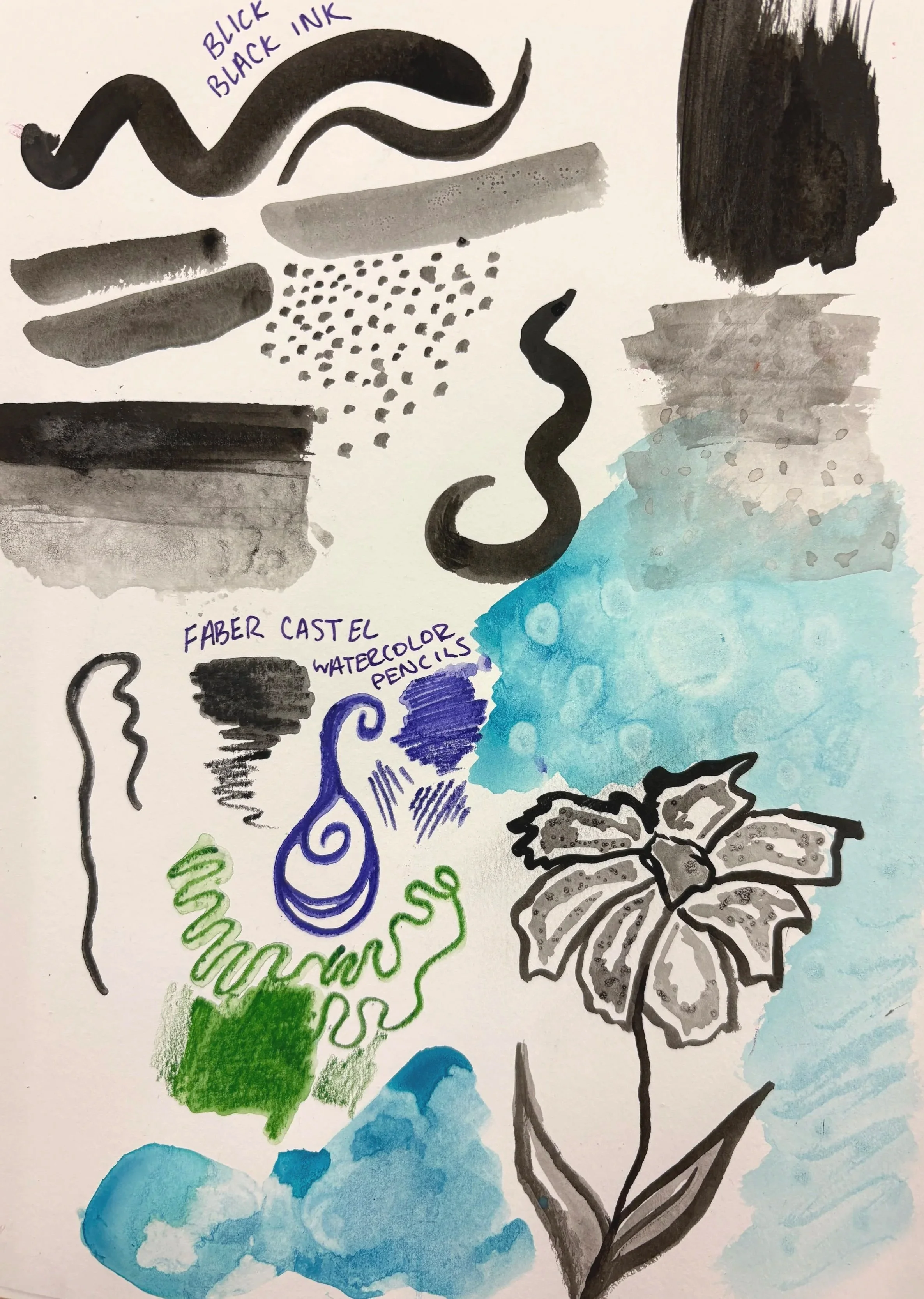
The second part of exploring is mainly inks, watercolor pencils, and techniques.
Reflection
In my experimental phase, I really enjoyed layering different materials. For example, in the image above, I created a light wash of blue watercolor, then added hydrogen peroxide to create rain effects; after it dried, I made a flower with some details using salt.
In my research about the hazards of watercolor, most of them are non-toxic. When buying for schools, looking for (AP) or Approved Product can help you determine which may be best for you. If you see (CL), it means a cautionary label, which may steer you to another brand/product.
In the classroom, there should always be a sink around to clean up any spills. Using gloves can help also, and having paper towel stations under water cups is very helpful when cleaning brushes between colors. If a student gets paint in their eyes, they should quickly wash them out with water and get help.
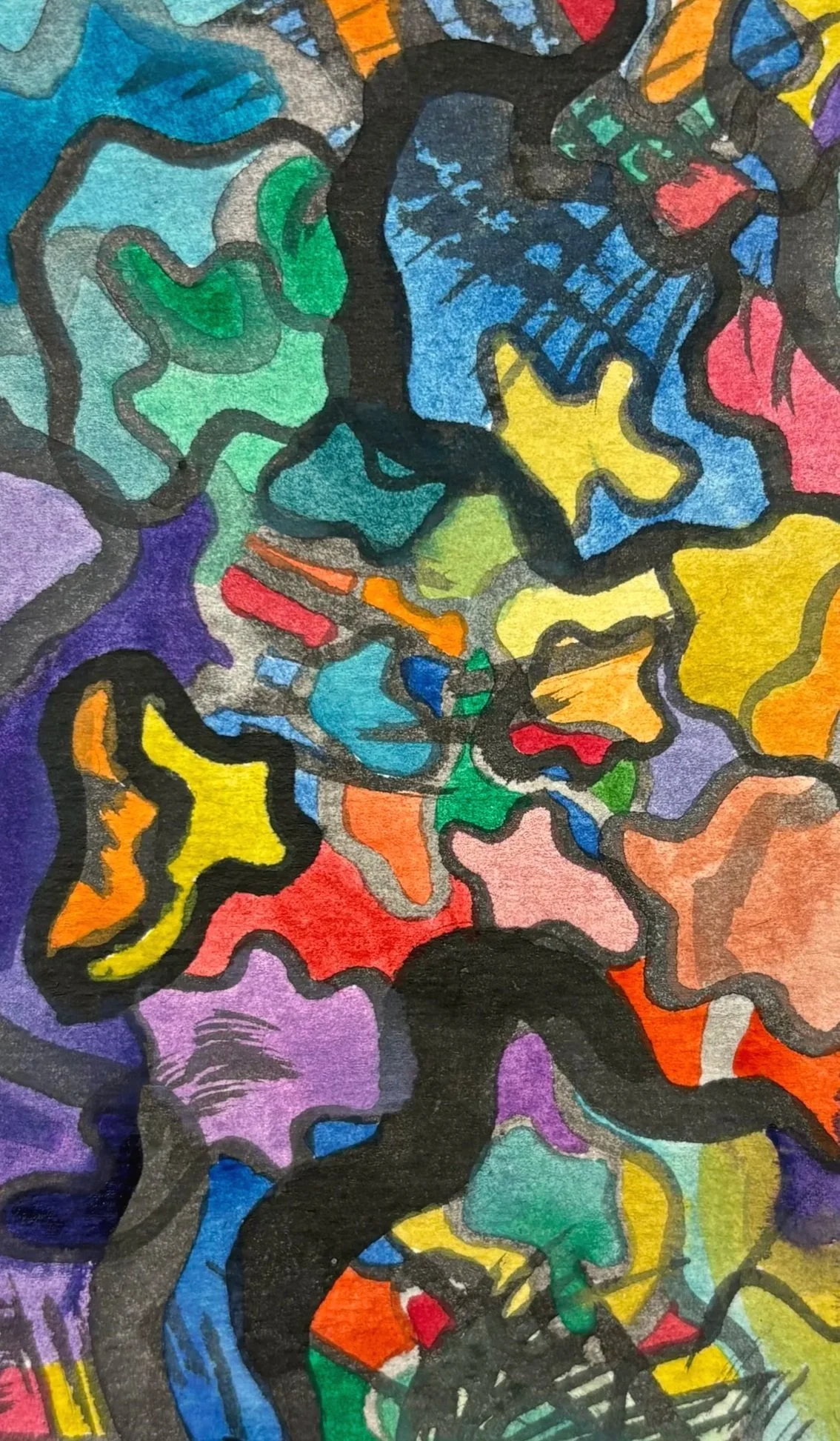
30-minute final study using watercolor paints and black ink.
Ideas for lessons PK-12
For each section of my lessons, the first step would be to make each material accessible and allow students 10 minutes to explore anything they have not used before or have questions about.
Elementary School
I think the perfect lesson for learning so many new materials would be abstract paintings. This can be anything the kids want, and since there are many materials to use, a broad topic is the best way to keep them engaged, since most will make something about a topic or thing they enjoy.
Middle School
This stage is very fun because I think students can handle learning about texture in watercolor. Including Saran wrap, salt, inks, watercolor pencils, cotton swabs, etc. For this age group, patterns would be the objective. I think this can be pretty much any subject matter as long as there is an element of repetition to consider it a pattern.
High School
For high school, I think this project would be about storytelling and creating visuals that go along with a poem or book. This can be completely their own story, or they can create their own visuals in response to a book they have read. This topic creates a boundary of expectations such as neatness, color choice, and structure in a non-serious layout.
The ink used in the art room is typically low hazard. However, if any student gets ink in their eye, they should wash it out with water quickly and wash their hands as well. This is another material for which I would recommend gloves if you have sensitive skin or want an easy, mess-free cleanup. Ink should also be stored in a safe place since it can be flammable if combined with other materials.
