Charcoal & Graphite Study
During my study, I completed a drawing focused on my theme of patterns. I decided to use the repetition of dragonflies and flowers to create a wallpaper-styled drawing. I used graphite pencils ranging from 2H to 6B to get light and dark values along the flower details and then switched to charcoal for filling in negative space. Overall I really like how this study turned out, and I have some ideas of how I could use these materials in the classroom for various age groups.
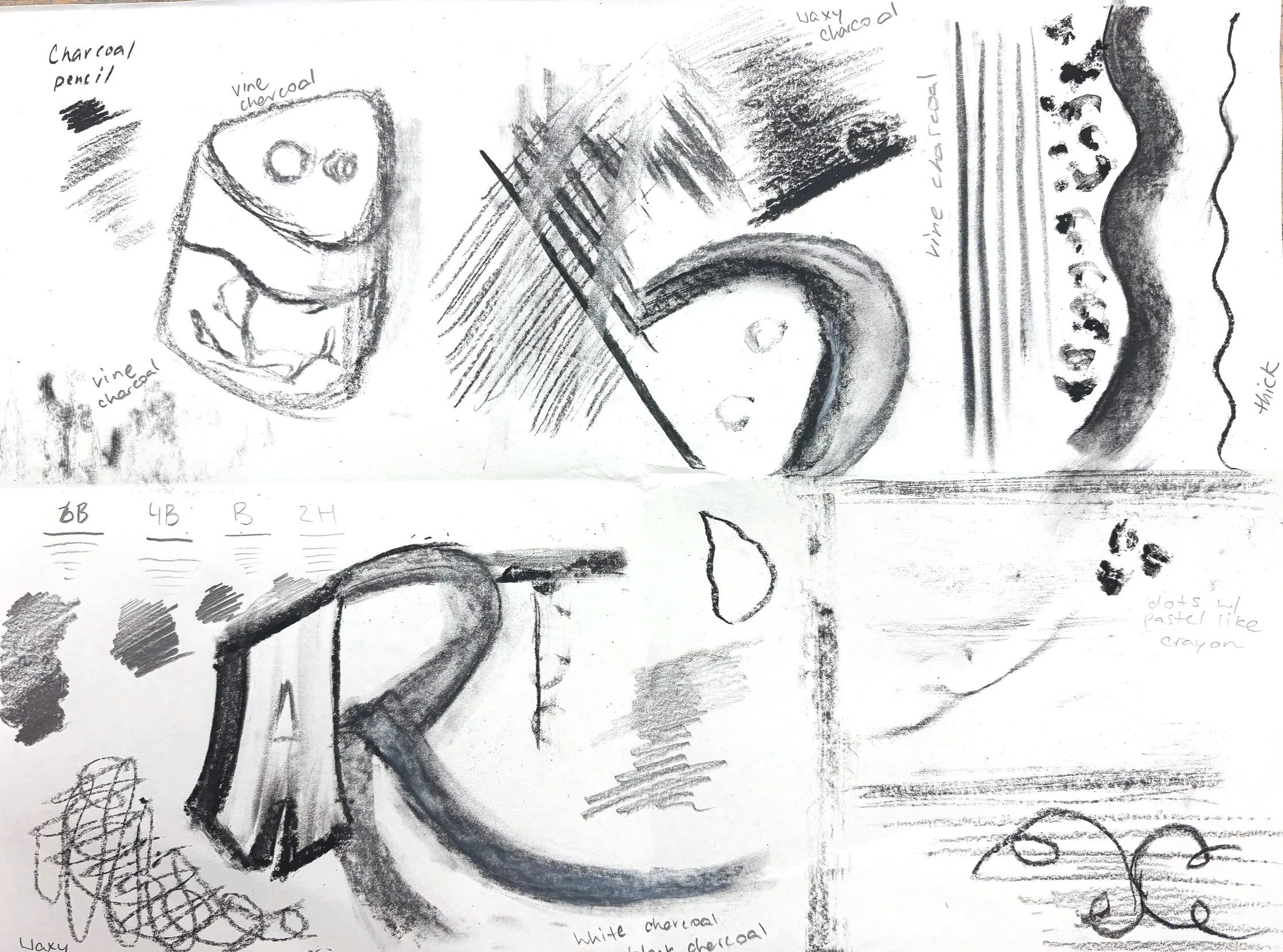
This was my 30-minute study using a variety of different materials, such as white charcoal, vine charcoal, waxy charcoal, charcoal pencils, graphite pencils (2H, 2B, 4B, 6B)
Reflection:
In my research on the technical and safety information about charcoal, I found that charcoal is typically made from grapevines, which is its purest form. Natural gums are also used as binders, so they are safe. When shopping for these materials, you can look for brands labeled “non-toxic” as a precaution. Since charcoal does create dust, those who have a sensitivity or textural issue should use both gloves and a dust mask. To spread the dust around a drawing, a soft brush can be used to avoid dirty hands. When cleaning up, a wet paper towel is an excellent way for the dust to stick to the cloth and be wiped away quickly.
Graphite pencils are soft carbon and do not contain lead. Some pencils can be made by burning waste carbon from oil. In this case, you can always ask retailers for further information or search the internet.
https://www.liveabout.com/is-drawing-charcoal-toxic-1122908
High School-Perspective Drawings
For this lesson, the students would start off by testing blending techniques and watching videos about how to use charcoal to make light and shadow. For this project, I think the theme can be broad so that each student can decide what hobby, culture, meaning, or meaning they want their piece to be about. At this level, I think it is important to give at least one choice. Whether that be the topic, the size, the medium, or the meaning. In Differentiated Instruction in Art, Chapter 2, John Dewey states, “Education often failed due to its inability to connect with students and involve them in learning.” (30) This supports my thinking as to why it is important to give students options and take ownership of what they make.
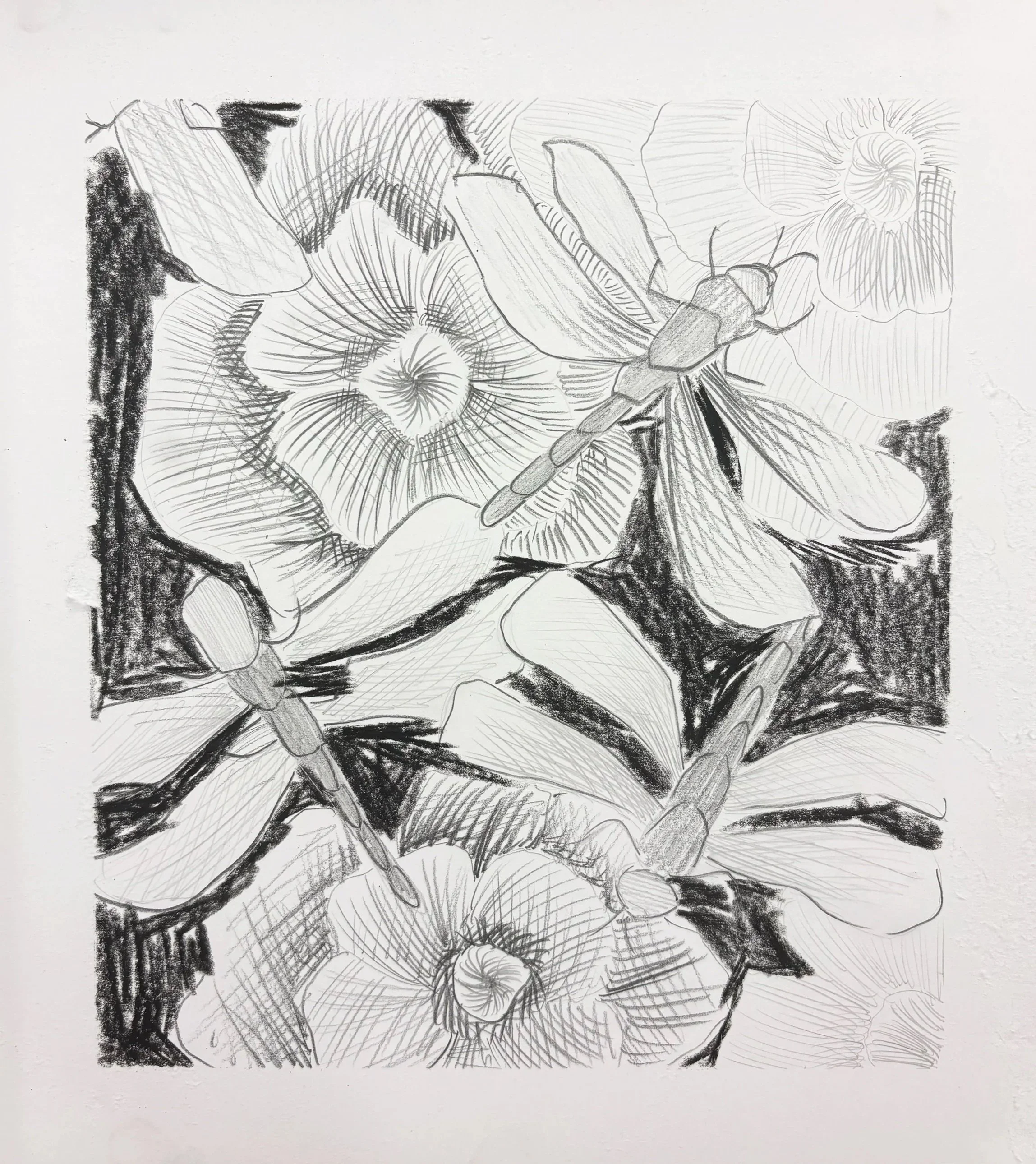
Final study after 30-45 minutes using graphite pencils and waxy charcoal.
Ideas for lessons PK-12
For each grade level, I would have a variety of materials that I listed earlier, along with paper towels, smudgers, brushes, erasers, and colored paper. In the Exploring Art Materials Chapter 1, there was a lot of discussion about what expressive ideas you can interpret with these materials. The students would all be asked to explore with these materials for 20 minutes, as I talked about the project objectives.
Elementary students—Halloween-themed!
Making either a glowing jack-o'-lantern with white charcoal on black paper or a gloomy version with black charcoal on white paper.
Middle School—Optical Illusions!
For this lesson, students would first make gradient samples and learn how to blend the charcoal. Then, they can section their paper with lines from each corner and then, in the center, make squiggly shapes going outward. Then, taking charcoal, they mark every other shape in each “ring” going outward and switch between black and white charcoal blending. I would not restrict the size, what lines, or how many they want to add.
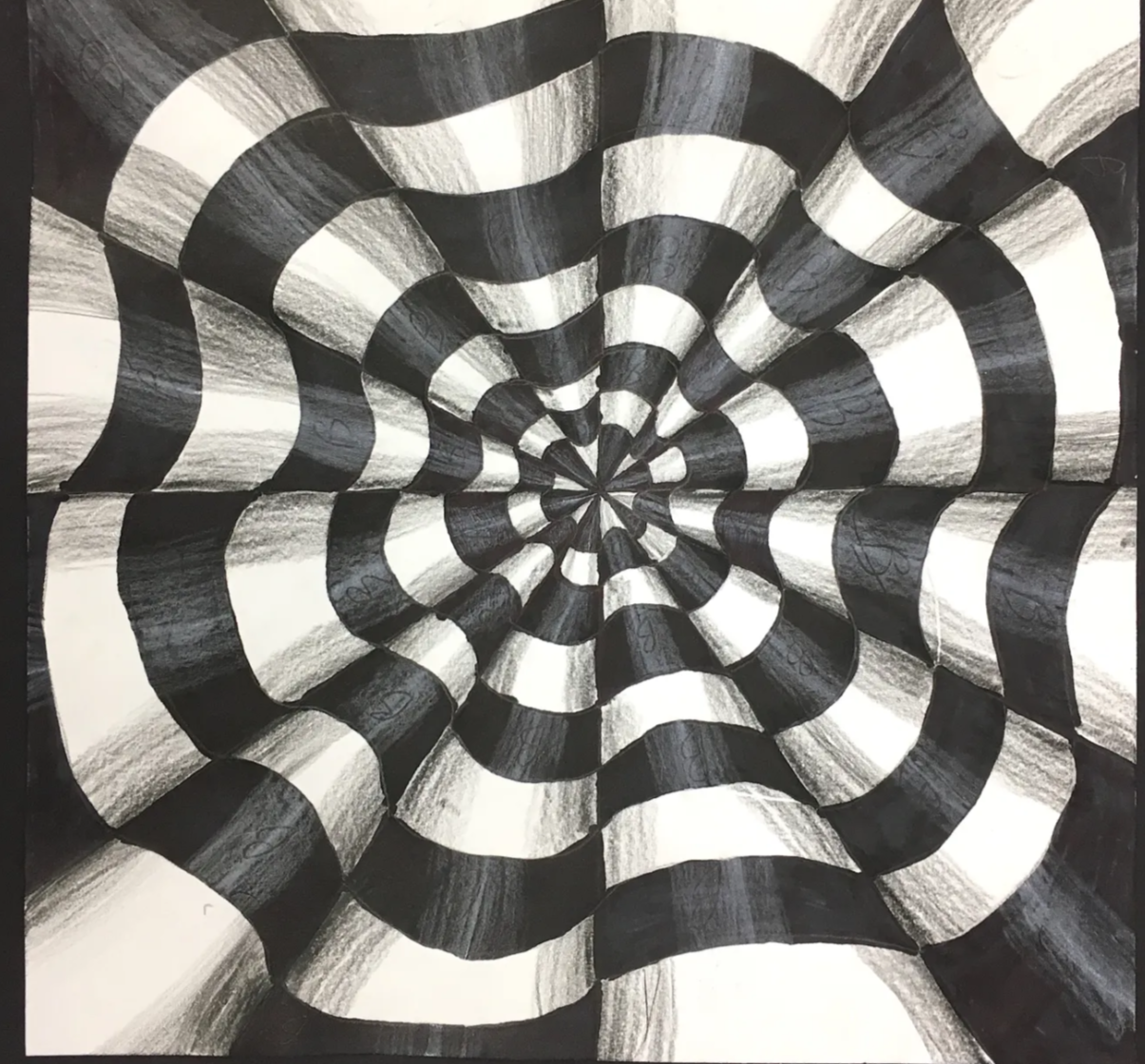
My example from teaching this last summer!
